| MONDAY 3 NOVEMBER | ||||
|---|---|---|---|---|
| 12:30 PM - 12:50 PM |
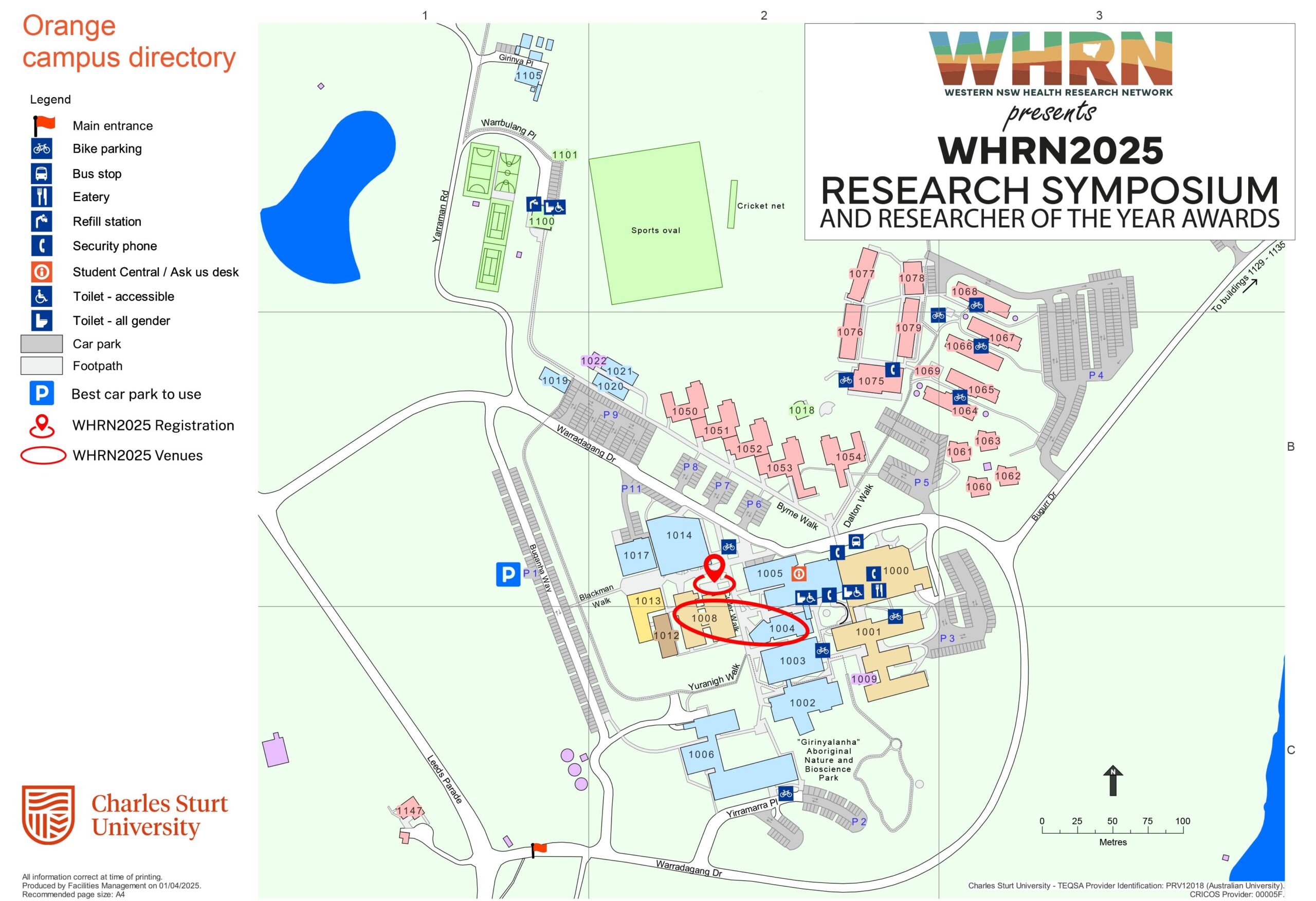
Registration and lunch packs on arrival 1008 Foyer |
|||
| 12:50 PM - 1:00 PM |
Welcome to Country - Orange Lands Council 1008 Foyer |
|||
| 1:00 PM - 2:15 PM |
The Rural Health Research Journey in Western NSW: From Idea to Publication Research Office team at Western NSW LHD 1008/206 |
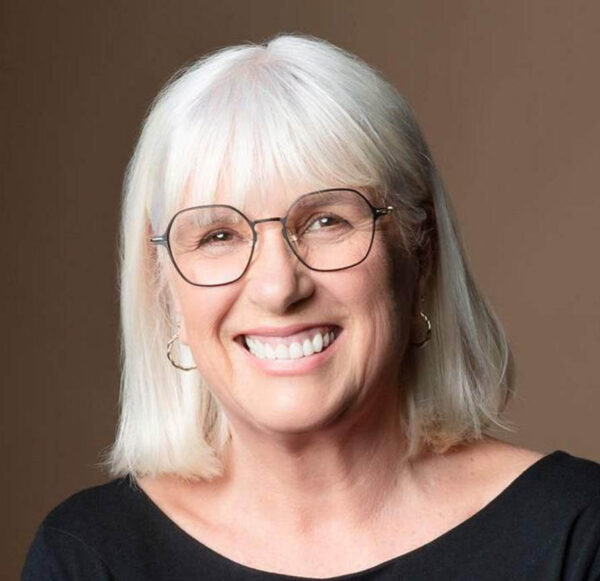
An inclusive approach to Aboriginal health research – for Aboriginal and non-Aboriginal researchers Prof Kerrie Doyle | ||
| 2:25 PM - 3:40 PM |
How to build a Research Team with people and AI tools Dr Catherine Keniry, A/Prof Rachel Rossiter, Prof Sharon Brownie, Lorraine Rose 1008/206 |
Implementation Science A/Prof Leanne Hassett 1008/110 |
||
| 3:40 PM - 4:00 PM |
Afternoon Tea 1008 Foyer |
|||
| 4:00 PM - 5:00 PM |
Research Networks - Connecting collaborators. Big and small, come meet them all! 1008/206 |
|||
| 5:45 PM - 10:00 PM |
Western NSW Researcher of the Year Awards Gala Dinner Duntryleague Golf Club |
|||
| TUESDAY 4 NOVEMBER | ||||
| 8:30 AM - 9:00 AM |
Registration 1008 Foyer |
|||
| 9:00 AM - 9:40 AM |
Acknowledgement of Country and official opening of Scientific Program Deb Kenna and Mel Nott WHRN Sustainability Plan Gerald Chitsunge 1004/120 |
|||
| 9:40 AM - 10:10 AM |
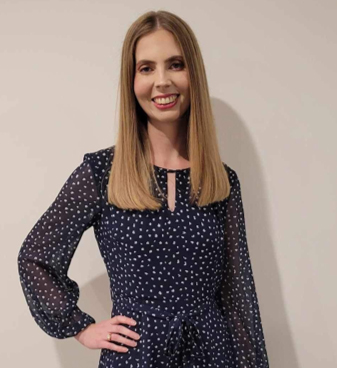
Keynote: “Holding space for ‘tricking the trickster’: Relational accountability and Aboriginal ethics in community health research” Dr Reakeeta Smallwood 1004/120 |
|||
| 10:10 AM - 10:20 AM |
Scientific Presentations Overview 1004/120 |
|||
| 10:20 AM - 10:40 AM |
Morning Tea ePoster Viewing 1008 Foyer |
|||
|
Older rural people 1004/120 |
Strengthening rural communities 1004/106 |
Enhancing access to rural healthcare 1008/206 |
Virtual and digital health 1008/110 |
|
| 10:45 AM - 11:00 AM |
Elsie de Klerk What makes us Sing Out? The essential elements of a regional, inclusive dementia choir [G] |
Andreia Schineanu Engage, Explore, Empower - Wagga Youth Forum [O] |
Ian Burton Multidisciplinary Care and Survival Patterns in Stage III Non-Small Cell Lung Cancer: Insights from a Regional Australian Centre [S] |
Heather Russell Virtual wound care in regional residential aged care settings: an implementation study protocol [E] |
| 11:00 AM - 11:15 AM |
Patrick Golemo Dementia and Cognitive Impairment in the Farming Community. A Qualitative Study of Carers Perceptions of Risks/Barriers to Care [S] |
Rajneesh Kaur Regulatory Intervention and Rural Injury Prevention: A Preliminary Review of the 2019 Quad Bike Safety Standard in Australia [G] |
Kasuni Marambage Forecasting Age-Specific Trends in Breast Cancer Incidence and Mortality in Australia, 2022–2050 [E] |
Stephanie Nelson Sharing what works: quality of life impacts and service costing of virtual care for people with intellectual disability [G] |
| 11:15 AM - 11:30 AM |
Nathan Somerville Understanding Fall-Related Injuries in Older Australian Farmers [S] |
Diana Kubowicz, Alice Gordon and Wendy Holmes Supporting Aboriginal Health Practitioners to Vaccinate Mob [O] |
Antez Varghese & Brianna Mead Improving Rural Surgical Access: A Pilot Evaluation of Rural Generalist Surgical Services in Parkes, NSW [S] |
Anna Thompson How do you investigate what patients think about a service they don’t know exists? Assessing community acceptability of remote patient monitoring in rural health facilities [G] |
| 11:30 AM - 11:45 AM |
Georgia Long Factors Influencing End-of-life Care for Patients aged 75 years or older Admitted to the Intensive Care Unit (ICU) in a Regional Australian Hospital [S] |
Uchechukwu Levi Osuagwu The Impact of the Bathurst Men's Walk and Talk Program on Well-Being Outcomes in Rural Men - A Cross-Sectional Study [G] |
Meredith Eagle & Catherine Keniry Enhancing Access to Drug & Alcohol (D&A) Services in Western NSW – Identifying Key Research Priorities [E] |
Leigh Davison Evaluation of SW Connect: A virtual group supervision program for rural and remote social workers [S] |
| 11:45 AM - 12:00 PM |
Deborah Magee Person-centred care, power, and organisational culture in aged care in rural and regional Australia [E] |
Jia Rajesh Thadani, Lazmi Binte Kabir,
Paula Cahill Walking Towards Well Being: Social Prescribing in Rural Australia [S] |
Angus Waldon Endoscopic Retrograde Cholangiopancreatography Outcomes for Indications Other Than Choledocholithiasis in Regional NSW: A Single-centre Retrospective Audit [S] |
Melissa Nott Partnering to build an oral and dental health network in regional NSW [G] |
| 12:00 PM - 12:45 PM |
Lunch 1008 foyer 12:15pm: 10 x 3min Lightning talks for selected ePosters - 1008/110 |
|||
| 12:50 PM - 1:20 PM |
Keynote: "Improving Health Equity and Access: The Power of Collaborative Networks" Professor Sharon Brownie 1004/120 |
|||
| 1:20 PM - 1:25 PM |
Afternoon Scientific Presentations Overview 1004/120 |
|||
|
Emergency and mobile medicine 1004/120 |
Mental health and wellbeing 1004/106 |
Partnerships and capacity building 1008/206 |
Primary healthcare 1008/110 |
|
| 1:30 PM - 1:45 PM |
Grace Ross A retrospective descriptive study of patients transported by fixed wing aircraft requiring an emergency doctor from the Broken Hill Royal Flying Doctor Service base [S] |
Andreia Schineanu Unveiling the Journey: Investigating the Biological and Psychological Effects of Trauma in Yazidi Women Living in Regional Australia [E] |
Luke Marks Real-World Implementation of Nursing Professional Practice and Leadership Frameworks: A Scoping Review Highlighting Rural Healthcare Knowledge Gaps [E] |
Rachel Rossiter Factors influencing the recruitment and retention of primary health care nurses in rural and remote areas: An evidence-based approach [O] |
| 1:45 PM - 2:00 PM |
Daipayan Mukhopadhyay Differences in Door-to-Device Times between self-presenting and ambulance delivered ST-Elevation Myocardial Infarction patients in Western New South Wales: A Retrospective Cohort Study [S] |
M Mamun Huda Effectiveness of Behavioural and Psychosocial Interventions for Improving Adolescent Mental Health in Rural Areas in Higher Income Countries: A Systematic Review of Randomised Controlled Trials [S] |
Dilli Banjade Building Regional Capability: A Success Story of Medical Physics Training, Retention, and Service Innovation in Western NSW Health [G] |
Catherine Keniry & Melissa Nott ePrescribing and Active Script List awareness and adoption across the Western NSW region [G] |
| 2:00 PM - 2:15 PM |
Nicholas Ruthenberg Enhancing Access to CT Services in Rural and Remote Areas of New South Wales – Mobile CT [E] |
Ali Ahmed Adolescent Mental Health Help-Seeking Behaviours in Rural Australia: Cross-Sectional Analysis of a Nationwide Cohort Study [G] |
Sharon Laver, Catherine Leahy Strategic Partnerships for Rural Nursing Research: Building Capacity and Capability Through Collaboration [O] |
Kam Cheong Wong Integrating Rural Community Screening Initiatives into the General Practice System – A Focus Group Qualitative Evaluation [G] |
| 2:15 PM - 2:30 PM |
Cindy Earl How to support clinical pathway use in emergency departments to treat cardiac symptoms: A project prioritising rural clinician perspectives [E] |
Subash Thapa Parental Childhood Physical and Sexual Abuse and Associations with Adolescent Mental Health Outcomes: Findings from the Longitudinal Study of Australian Children [G] |
Shannon Pike Enhancing Rural Healthcare Access through University and Community Partnerships [G] |
Helen Moriarty A simple screening test for recent low level exposure to DNA damaging agents such as organophosphate based pesticides [G] |
| 2:30 PM - 2:45 PM |
Jacob Stretton Are Rural Australian STEMI patients disproportionately affected by LVEF Dysfunction? [S] |
Giti Haddadan Wellbeing Challenges and Support Needs of informal Carers of Autistic people in Rural, Regional and Remote Australia and New Zealand: A Scoping Review [G] |
Lynette Bullen Walking Side by Side: Mentoring and support to build the next generation of Aboriginal leaders [O] |
Shin Koay Teh Usability and Acceptability of the High-Density Microarray Patch (HD-MAP) for Adult Vaccination: A Mixed Methods Study [S] |
| 2:45 PM - 3:05 PM |
Afternoon Tea 1008 Foyer |
|||
| 3:10 PM - 3:40 PM |
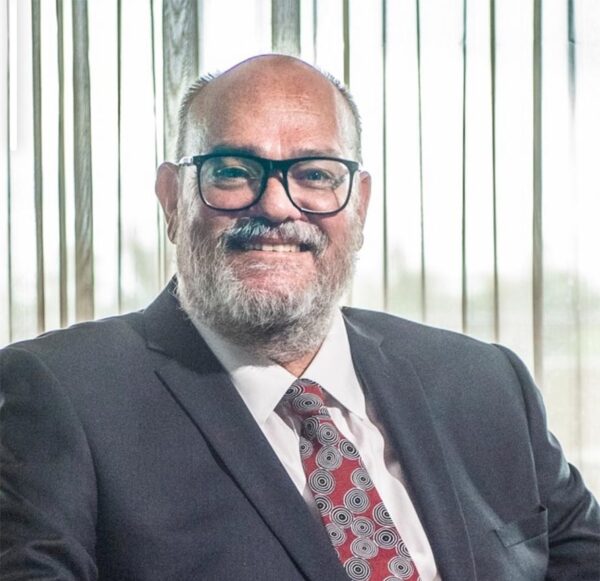
Closing Keynote: First Nations Health Research: Wholes versus Holes Professor Tony Dreise Pro Vice-Chancellor (First Nations Engagement), Charles Sturt University 1004/120 |
|||
| 3:40 PM - 3:50 PM |
Scientific Program Awards 1004/120 |
|||
| 3:50 PM - 4:00 PM |
Symposium Wrap and Close Co-Chairs - Catherine Keniry and Deb Kenna 1004/120 |
|||
The above program is in continuing development and serves as a guide prior to Registration. Details will be continuously updated and as such changes may still occur.
MONDAY 3 NOVEMBER
12:30 PM - 12:50 PM
Registration and lunch packs on arrival
1008 Foyer
Registration and lunch packs on arrival
1008 Foyer
12:50 PM - 1:00 PM
Welcome to Country - Orange Aboriginal Lands Council
1008 Foyer
Welcome to Country - Orange Aboriginal Lands Council
1008 Foyer
1:00 PM - 2:15 PM
The Rural Health Research Journey in Western NSW: From Idea to Publication
1008/206
1008/206
OR
An inclusive approach to Aboriginal health research – for Aboriginal and non-Aboriginal researchers
1008/110
1008/110
2:25 PM - 3:40 PM
How to build a Research Team with people and AI tools
1008/206
1008/206
OR
Implementation Science
1008/110
1008/110
3:40 PM - 4:00 PM
Afternoon Tea
1008 Foyer
Afternoon Tea
1008 Foyer
4:00 PM - 5:00 PM
Research Networks - Connecting collaborators.
Big and small, come meet them all!
1008/206
Research Networks - Connecting collaborators.
Big and small, come meet them all!
1008/206
5:45 PM - 10:00 PM
Western NSW Researcher of the Year Awards
Gala Dinner
Duntryleague Golf Club
Western NSW Researcher of the Year Awards
Gala Dinner
Duntryleague Golf Club
TUESDAY 4 NOVEMBER
8:30 AM - 9:00 AM
Registration
1008 Foyer
Registration
1008 Foyer
9:00 AM - 9:40 AM
Acknowledgement of Country (Deb Kenna) and official opening of Scientific Program (Mel Nott)
WHRN Sustainability Plan
Gerald Chitsunge
1004/120
Acknowledgement of Country (Deb Kenna) and official opening of Scientific Program (Mel Nott)
WHRN Sustainability Plan
Gerald Chitsunge
1004/120
9:40 AM - 10:10 AM
Keynote:
“Holding space for ‘tricking the trickster’: Relational accountability and Aboriginal ethics in community health research”
Dr Reakeeta Smallwood
1004/120
Keynote:
“Holding space for ‘tricking the trickster’: Relational accountability and Aboriginal ethics in community health research”
Dr Reakeeta Smallwood
1004/120
10:10 AM - 10:20 AM
Scientific Presentations Overview
1004/120
Scientific Presentations Overview
1004/120
10:20 AM - 10:40 AM
Morning Tea
ePoster Viewing
1008 Foyer
Morning Tea
ePoster Viewing
1008 Foyer
Stream 1: Older rural people
1004/120
1004/120
10:45 AM - 11:00 AM
Elsie de Klerk
What makes us Sing Out? The essential elements of a regional, inclusive dementia choir
[G]
Elsie de Klerk
What makes us Sing Out? The essential elements of a regional, inclusive dementia choir
[G]
11:00 AM - 11:15 AM
Patrick Golemo
Dementia and Cognitive Impairment in the Farming Community. A Qualitative Study of Carers Perceptions of Risks/Barriers to Care
[S]
Patrick Golemo
Dementia and Cognitive Impairment in the Farming Community. A Qualitative Study of Carers Perceptions of Risks/Barriers to Care
[S]
11:15 AM - 11:30 AM
Nathan Somerville
Understanding Fall-Related Injuries in Older Australian Farmers
[S]
Nathan Somerville
Understanding Fall-Related Injuries in Older Australian Farmers
[S]
11:30 AM - 11:45 AM
Georgia Long
Factors Influencing End-of-life Care for Patients aged 75 years or older Admitted to the Intensive Care Unit (ICU) in a Regional Australian Hospital
[S]
Georgia Long
Factors Influencing End-of-life Care for Patients aged 75 years or older Admitted to the Intensive Care Unit (ICU) in a Regional Australian Hospital
[S]
11:45 AM - 12:00 PM
Deborah Magee
Person-centred care, power, and organisational culture in aged care in rural and regional Australia
[E]
Deborah Magee
Person-centred care, power, and organisational culture in aged care in rural and regional Australia
[E]
OR
Stream 2: Strengthening rural communities
1004/106
1004/106
10:45 AM - 11:00 AM
Andreia Schineanu
Engage, Explore, Empower - Wagga Youth Forum
[O]
Andreia Schineanu
Engage, Explore, Empower - Wagga Youth Forum
[O]
11:00 AM - 11:15 PM
Rajneesh Kaur
Regulatory Intervention and Rural Injury Prevention: A Preliminary Review of the 2019 Quad Bike Safety Standard in Australia
[G]
Rajneesh Kaur
Regulatory Intervention and Rural Injury Prevention: A Preliminary Review of the 2019 Quad Bike Safety Standard in Australia
[G]
11:15 AM - 11:30 AM
Diana Kubowicz, , Alice Gordon and Wendy Holmes
Supporting Aboriginal Health Practitioners to Vaccinate Mob
[O]
Diana Kubowicz, , Alice Gordon and Wendy Holmes
Supporting Aboriginal Health Practitioners to Vaccinate Mob
[O]
11:30 AM - 11:45 AM
Uchechukwu Levi Osuagwu
The Impact of the Bathurst Men's Walk and Talk Program on Well-Being Outcomes in Rural Men - A Cross-Sectional Study
[G]
Uchechukwu Levi Osuagwu
The Impact of the Bathurst Men's Walk and Talk Program on Well-Being Outcomes in Rural Men - A Cross-Sectional Study
[G]
11:45 AM - 12:00 PM
Jia Rajesh Thadani, Lazmi Binte Kabir, Paula Cahill
Walking Towards Well Being: Social Prescribing in Rural Australia
[S]
Jia Rajesh Thadani, Lazmi Binte Kabir, Paula Cahill
Walking Towards Well Being: Social Prescribing in Rural Australia
[S]
OR
Stream 3: Enhancing access to rural healthcare
1008/206
1008/206
10:45 AM - 11:00 AM
Ian Burton
Multidisciplinary Care and Survival Patterns in Stage III Non-Small Cell Lung Cancer: Insights from a Regional Australian Centre
[S]
Ian Burton
Multidisciplinary Care and Survival Patterns in Stage III Non-Small Cell Lung Cancer: Insights from a Regional Australian Centre
[S]
11:00 AM - 11:15 AM
H.M. Kasuni Akalanka
Forecasting Age-Specific Trends in Breast Cancer Incidence and Mortality in Australia, 2022–2050
[E]
H.M. Kasuni Akalanka
Forecasting Age-Specific Trends in Breast Cancer Incidence and Mortality in Australia, 2022–2050
[E]
11:15 AM - 11:30 AM
Antez Varghese & Brianna Mead
Improving Rural Surgical Access: A Pilot Evaluation of Rural Generalist Surgical Services in Parkes, NSW
[S]
Antez Varghese & Brianna Mead
Improving Rural Surgical Access: A Pilot Evaluation of Rural Generalist Surgical Services in Parkes, NSW
[S]
11:30 AM - 11:45 AM
Meredith Eagle & Catherine Keniry
Enhancing Access to Drug & Alcohol (D&A) Services in Western NSW – Identifying Key Research Priorities
[E]
Meredith Eagle & Catherine Keniry
Enhancing Access to Drug & Alcohol (D&A) Services in Western NSW – Identifying Key Research Priorities
[E]
11:45 AM - 12:00 PM
Angus Waldon
Endoscopic Retrograde Cholangiopancreatography Outcomes for Indications Other Than Choledocholithiasis in Regional NSW: A Single-centre Retrospective Audit
[S]
Angus Waldon
Endoscopic Retrograde Cholangiopancreatography Outcomes for Indications Other Than Choledocholithiasis in Regional NSW: A Single-centre Retrospective Audit
[S]
OR
Stream 4: Virtual and digital health
1008/110
1008/110
10:45 AM - 11:00 AM
Heather Russell
Virtual wound care in regional residential aged care settings: an implementation study protocol
[E]
Heather Russell
Virtual wound care in regional residential aged care settings: an implementation study protocol
[E]
11:00 AM - 11:15 AM
Stephanie Nelson
Sharing what works: quality of life impacts and service costing of virtual care for people with intellectual disability
[G]
Stephanie Nelson
Sharing what works: quality of life impacts and service costing of virtual care for people with intellectual disability
[G]
11:15 AM - 11:30 AM
Anna Thompson
How do you investigate what patients think about a service they don’t know exists? Assessing community acceptability of remote patient monitoring in rural health facilities
[G]
Anna Thompson
How do you investigate what patients think about a service they don’t know exists? Assessing community acceptability of remote patient monitoring in rural health facilities
[G]
11:30 AM - 11:45 AM
Leigh Davison
Evaluation of SW Connect: A virtual group supervision program for rural and remote social workers
[S]
Leigh Davison
Evaluation of SW Connect: A virtual group supervision program for rural and remote social workers
[S]
11:45 AM - 12:00 PM
Melissa Nott
Partnering to build an oral and dental health network in regional NSW
[G]
Melissa Nott
Partnering to build an oral and dental health network in regional NSW
[G]
12:00 PM - 12:45 PM
Lunch
1008 foyer
12:15pm: 10 x 3min Lightning talks for selected ePosters - 1008/206
Lunch
1008 foyer
12:15pm: 10 x 3min Lightning talks for selected ePosters - 1008/206
12:50 PM - 1:20 PM
Keynote:
Improving Health Equity and Access: The Power of Collaborative Networks
Professor Sharon Brownie
1004/120
Keynote:
Improving Health Equity and Access: The Power of Collaborative Networks
Professor Sharon Brownie
1004/120
1:20 PM - 1:25 PM
Afternoon Scientific Presentations Overview
1004/120
Afternoon Scientific Presentations Overview
1004/120
Stream 1: Emergency and mobile medicine
1004/120
1004/120
1:30 PM - 1:45 PM
Grace Ross
A retrospective descriptive study of patients transported by fixed wing aircraft requiring an emergency doctor from the Broken Hill Royal Flying Doctor Service base
[S]
Grace Ross
A retrospective descriptive study of patients transported by fixed wing aircraft requiring an emergency doctor from the Broken Hill Royal Flying Doctor Service base
[S]
1:45 PM - 2:00 PM
Daipayan Mukhopadhyay
Differences in Door-to-Device Times between self-presenting and ambulance delivered ST-Elevation Myocardial Infarction patients in Western New South Wales: A Retrospective Cohort Study
[S]
Daipayan Mukhopadhyay
Differences in Door-to-Device Times between self-presenting and ambulance delivered ST-Elevation Myocardial Infarction patients in Western New South Wales: A Retrospective Cohort Study
[S]
2:00 PM - 2:15 PM
Nicholas Ruthenberg
Enhancing Access to CT Services in Rural and Remote Areas of New South Wales – Mobile CT
[E]
Nicholas Ruthenberg
Enhancing Access to CT Services in Rural and Remote Areas of New South Wales – Mobile CT
[E]
2:15 PM - 2:30 PM
Cindy Earl
How to support clinical pathway use in emergency departments to treat cardiac symptoms: A project prioritising rural clinician perspectives
[E]
Cindy Earl
How to support clinical pathway use in emergency departments to treat cardiac symptoms: A project prioritising rural clinician perspectives
[E]
2:30 PM - 2:45 PM
Jacob Stretton
Are Rural Australian STEMI patients disproportionately affected by LVEF Dysfunction?
[S]
Jacob Stretton
Are Rural Australian STEMI patients disproportionately affected by LVEF Dysfunction?
[S]
OR
Stream 2: Mental health and wellbeing
1004/106
1004/106
1:30 PM - 1:45 PM
Andreia Schineanu
Unveiling the Journey: Investigating the Biological and Psychological Effects of Trauma in Yazidi Women Living in Regional Australia
[E]
Andreia Schineanu
Unveiling the Journey: Investigating the Biological and Psychological Effects of Trauma in Yazidi Women Living in Regional Australia
[E]
1:45 PM - 2:00 PM
M Mamun Huda
Effectiveness of Behavioural and Psychosocial Interventions for Improving Adolescent Mental Health in Rural Areas in Higher Income Countries: A Systematic Review of Randomised Controlled Trials
[S]
M Mamun Huda
Effectiveness of Behavioural and Psychosocial Interventions for Improving Adolescent Mental Health in Rural Areas in Higher Income Countries: A Systematic Review of Randomised Controlled Trials
[S]
2:00 PM - 2:15 PM
Ali Ahmed
Adolescent Mental Health Help-Seeking Behaviours in Rural Australia: Cross-Sectional Analysis of a Nationwide Cohort Study
[G]
Ali Ahmed
Adolescent Mental Health Help-Seeking Behaviours in Rural Australia: Cross-Sectional Analysis of a Nationwide Cohort Study
[G]
2:15 PM - 2:30 PM
Subash Thapa
Parental Childhood Physical and Sexual Abuse and Associations with Adolescent Mental Health Outcomes: Findings from the Longitudinal Study of Australian Children
[G]
Subash Thapa
Parental Childhood Physical and Sexual Abuse and Associations with Adolescent Mental Health Outcomes: Findings from the Longitudinal Study of Australian Children
[G]
2:30 PM - 2:45 PM
Giti Haddadan
Wellbeing Challenges and Support Needs of informal Carers of Autistic people in Rural, Regional and Remote Australia and New Zealand: A Scoping Review
[G]
Giti Haddadan
Wellbeing Challenges and Support Needs of informal Carers of Autistic people in Rural, Regional and Remote Australia and New Zealand: A Scoping Review
[G]
OR
Stream 3: Partnerships and capacity
1008/206
1008/206
1:30 PM - 1:45 PM
Luke Marks
Real-World Implementation of Nursing Professional Practice and Leadership Frameworks: A Scoping Review Highlighting Rural Healthcare Knowledge Gaps
[E]
Luke Marks
Real-World Implementation of Nursing Professional Practice and Leadership Frameworks: A Scoping Review Highlighting Rural Healthcare Knowledge Gaps
[E]
1:45 PM - 2:00 PM
Dilli Banjade
Building Regional Capability: A Success Story of Medical Physics Training, Retention, and Service Innovation in Western NSW Health
[G]
Dilli Banjade
Building Regional Capability: A Success Story of Medical Physics Training, Retention, and Service Innovation in Western NSW Health
[G]
2:00 PM - 2:15 PM
Sharon Laver, Catherine Leahy
Strategic Partnerships for Rural Nursing Research: Building Capacity and Capability Through Collaboration
[O]
Sharon Laver, Catherine Leahy
Strategic Partnerships for Rural Nursing Research: Building Capacity and Capability Through Collaboration
[O]
2:15 PM - 2:30 PM
Shannon Pike
Enhancing Rural Healthcare Access through University and Community Partnerships
[G]
Shannon Pike
Enhancing Rural Healthcare Access through University and Community Partnerships
[G]
2:30 PM - 2:45 PM
Lynette Bullen
Walking Side by Side: Mentoring and support to build the next generation of Aboriginal leaders
[O]
Lynette Bullen
Walking Side by Side: Mentoring and support to build the next generation of Aboriginal leaders
[O]
OR
Stream 4: Primary healthcare
1008/110
1008/110
1:30 PM - 1:45 PM
Rachel Rossiter
Factors influencing the recruitment and retention of primary health care nurses in rural and remote areas: An evidence-based approach
[O]
Rachel Rossiter
Factors influencing the recruitment and retention of primary health care nurses in rural and remote areas: An evidence-based approach
[O]
1:45 PM - 2:00 PM
Catherine Keniry & Melissa Nott
ePrescribing and Active Script List awareness and adoption across the Western NSW region
[G]
Catherine Keniry & Melissa Nott
ePrescribing and Active Script List awareness and adoption across the Western NSW region
[G]
2:00 PM - 2:15 PM
Kam Cheong Wong
Integrating Rural Community Screening Initiatives into the General Practice System – A Focus Group Qualitative Evaluation
[G]
Kam Cheong Wong
Integrating Rural Community Screening Initiatives into the General Practice System – A Focus Group Qualitative Evaluation
[G]
2:15 PM - 2:30 PM
Helen Moriarty
A simple screening test for recent low level exposure to DNA damaging agents such as organophosphate based pesticides
[G]
Helen Moriarty
A simple screening test for recent low level exposure to DNA damaging agents such as organophosphate based pesticides
[G]
2:30 PM - 2:45 PM
Shin Koay Teh
Usability and Acceptability of the High-Density Microarray Patch (HD-MAP) for Adult Vaccination: A Mixed Methods Study
[S]
Shin Koay Teh
Usability and Acceptability of the High-Density Microarray Patch (HD-MAP) for Adult Vaccination: A Mixed Methods Study
[S]
2:45 PM - 3:05 PM
Afternoon Tea
1008 Foyer
Afternoon Tea
1008 Foyer
3:10 PM - 3:40 PM
Closing Keynote:
First Nations Health Research: Wholes versus Holes
Professor Tony Dreise
Pro Vice-Chancellor (First Nations Engagement), Charles Sturt University
1004/120
Closing Keynote:
First Nations Health Research: Wholes versus Holes
Professor Tony Dreise
Pro Vice-Chancellor (First Nations Engagement), Charles Sturt University
1004/120
3:40 PM - 3:50 PM
Scientific Program Awards
1004/120
Scientific Program Awards
1004/120
3:50 PM - 4:00 PM
Symposium Wrap and Close - WHRN Co-chairs Catherine Keniry and Deb Kenna
1004/120
Symposium Wrap and Close - WHRN Co-chairs Catherine Keniry and Deb Kenna
1004/120