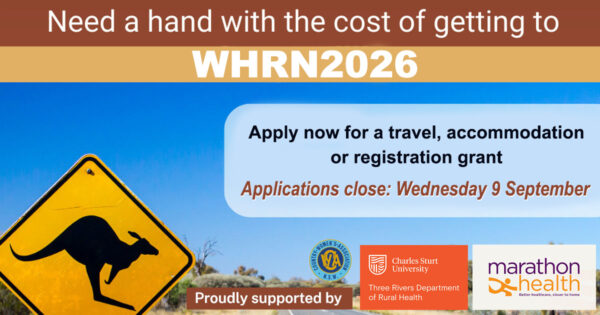
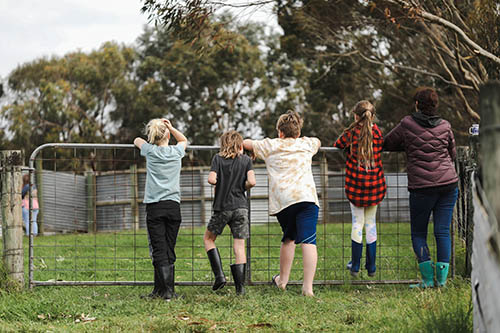
Rural health research networks, supported by corporate and community partnerships, are essential for addressing the health disparities faced by rural and remote populations. 

By combining resources, enhancing communication, ensuring sustainability, and building local research capacity, these collaborations can lead to significant improvements in health outcomes for individuals living in rural communities.

WHRN2026 Research Symposium countdown

Days

WHRN MEMBERS:

Have a Research Project you wish to advertise recruitment for?

The challenge we face:

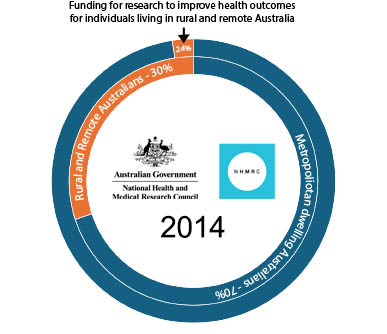
Approximately 30% of Australians live in rural and remote areas

Australians living in rural and remote areas generally have poorer health than their urban counterparts

People living in rural and remote areas have less access to health professionals and services

Funding for research specifically aimed to deliver health benefits to Australians living in rural and remote areas is significantly under representative of the need

Barclay, L., Phillips, A., & Lyle, D. (2023). Rural and remote health research: Does the investment match the need? Rural and Remote Health, 23(1), 1-12.

Latest News

Plenary Session:

Driving Equity in Research: Supporting Regional, Rural, Remote and Indigenous Communities

We will be joined by Dr Natasha Friend and Dr Bronwyn Wyatt from the National Health and Medical Research Council (NHMRC) Equity Team. They will provide an overview of NHMRC’s equity policy activities, with a particular focus on gender, regional, remote and rural (RRR) equity and indigenous equity activities

This presentation will be followed by a session exploring the barriers faced by regional, rural and remote researchers with discussions on advancing equity across the research sector to complete the session.

Workshop:

Digital Health, AI and Equity in Rural Settings

  1. Smilo.ai:
  2. VisionFlex: An interactive experience with a live connection from the workshop room back to the VisionFlex demonstration suite in Sydney. You will watch a real consultation happen across several hundred kilometres, with live diagnostics coming back in real time. A mobile kit will be in situ so you can pick up and handle the devices themselves, including the examination camera, digital stethoscope and camera glasses.
  3. Pharma8:
  4. Virtual Clinical Pharmacy Service:
Presenters: Padma Gadiyar, Abe Warwick, Ged Hawthorn
Proudly Sponsored By:

Workshop:

Oral health is everyone’s business: Collaborative Oral Health Care in Rural Communities

  1. From Dental Chair to Primary Care: Integrating Oral and Systemic Health Associate Professor Shalinie King
    Rural Placement Programme Academic Lead, The University of Sydney Dental School, and Oral Health Programme Lead, Westmead Applied Research Centre

  2. Oral health advice in non-dental settings
    Dr Lauren Church
    Lecturer, The University of Sydney Dental School 

  3. Digital platforms to improve access to paediatric care (Vspec project)
    Associate Professor Mel Nott
    Principal Research Fellow | Three Rivers Department of Rural Health Charles Sturt University

  4. Caring and call to action for young smiles: International Recommendations for Children’s Oral Health
    Associate Professor Marco Benini Paschoal 
    Research lead in the Centre for Rural Dentistry and Oral Health at Charles Sturt University
Presenters:

Shalinie King is an Associate Professor with the University of Sydney Dental School where she is the academic lead for Rural Placements, and program lead for Oral Health Research at the Westmead Applied Research Centre (WARC). Shalinie is a practising clinician with experience working in both the public and private sectors, she has extensive teaching experience and recently completed a 12-month term as Director of Academic Education at the Sydney Dental School.

Her research interests include understanding the associations between oral health and overall health, developing and evaluating strategies to improve community access to basic oral health information focusing on the use of digital technologies to support oral health promotion. Her work aims to design and implement new models of care that integrate oral and overall health care and, that improve community awareness and knowledge about the importance of good oral health in contributing to better overall health outcomes.

Dr Lauren Church is a Lecturer with the University of Sydney Dental School, where she is third-year unit of study coordinator for the Bachelor of Oral Health. Lauren is a registered clinician with public and private sector experience and teaches BOH students in the acute care setting at Sydney Dental Hospital, where she fosters interprofessional learning between BOH and DMD students.

She recently completed her PhD at the University of Sydney. Her research examines the connection between oral health and cardiovascular disease, oral health education in hospital settings, and protocols for integrating digital oral health interventions into cardiac rehabilitation. Her work aims to shape compassionate, patient-centred clinicians and to advance oral health within broader public health strategies. Lauren is Deputy Chair of the Oral Health Association of Australia (NSW Branch) and NSW Oral Health Representative for the Public Health Association of Australia.

Melissa is a regionally based occupational therapist working with rural communities, health service users, families, health professionals and service providers. She has a strong background in collaborative and partnership-based research that focuses on translating evidence into healthcare practice, supporting health professionals to build sustainable research networks, co-design and co-production with community stakeholders, and evidencing impacts of healthcare initiatives.

Workshop:

Doing research that matters: How to plan program evaluation in rural health services

This workshop aims to provide an overview of key issues and considerations in planning and undertaking evaluation of health and wellbeing programs. Participants will be introduced to a simple step-by-step approach that can be applied successfully in many health program contexts. The workshop will draw on a case study of a Marathon Health program that has recently completed this evaluation process.

Read about the process: https://onlinelibrary.wiley.com/doi/epdf/10.1111/ajr.70068
Presenter: Matt Thomas

Matt Thomas is a clinical psychologist working in the role of Principal Practice Lead with Marathon Health, based in Bathurst, NSW. His role includes leading research activities focussed on evaluation of innovative rural health services and rural health workforce development.  He is an Adjunct Associate Professor in the School of Psychology at Charles Sturt University and in the Discipline of Psychiatry and Mental Health at the University of NSW.

Workshop:

Innovating together: A practical workshop on co-designing for rural health research

This workshop aims to equip participants with knowledge and practical skills for engaging health consumers in research co-design and implementation. Facilitated by an experienced team of health consumers and researchers, this will be a engaging and dynamic workshop that unpacks the co-design process.
 
Facilitators: Carrie Hayter, Health Consumers NSW and Melissa Nott, Three Rivers Department of Rural Health

Melissa is a regionally based occupational therapist working with rural communities, health service users, families, health professionals and service providers. She has a strong background in collaborative and partnership-based research that focuses on translating evidence into healthcare practice, supporting health professionals to build sustainable research networks, co-design and co-production with community stakeholders, and evidencing impacts of healthcare initiatives.

Workshop:

Strengthening the Rural Health Workforce Through Research

More details coming soon…

Presenters:
Proudly sponsored by:

Workshop:

Things We Have Learnt the Hard Way: An Introduction to Mental Health Research for New Starters

Mental health research is full of unexpected challenges. In this interactive workshop, we’ll discuss some of the common pitfalls and practical solutions we’ve learned through experience. it focuses on the practical things that don’t make it into research methods textbooks. Join us to explore literacy-friendly participant information sheets, distress and wellbeing protocols, reducing research burden on participants and clinicians, recruiting realistic samples in rural communities, and choosing the right outcome measures. Bring your questions and examples from your own projects. Experienced researchers are encouraged to come along and share their learnings too.
Presenters: Professor Julaine Allan, Dr Nicole Snowdon, Dr Kate Freire

Plenary Session:

Aboriginal and Torres Strait Islander leadership in research

We will hear from Michael Newman, Deputy CEO of the Lowitja Institute, who will provide an overview of the Institute’s work. He will be followed by Judy Johnson, Chair of the Riverina Medical and Dental Aboriginal Corporation, and Simone Sherriff, Senior Research Fellow at the Poche Centre for Indigenous Health, University of Sydney, who will present a Lowitja Institute-funded research case study from Western NSW.

Nicole Turner, CEO of the Aboriginal Health & Medical Research Council of NSW, will then discuss the importance of strategic research and its role in improving Aboriginal health outcomes. The session will conclude with an opportunity for questions and discussion.

Following this, Jamie Newman will introduce the Orange Aboriginal Medical Service (OAMS). We will then hear from Fiona Clarke, Clinical Administration Lead at OAMS, who will present research from the Antecedents of Renal Disease in Aboriginal Children and Young People (ARDAC) Kidney Health Research Program. Anne-Marie Mepham, Chronic Care Coordinator at OAMS, will then present Screen Your Way, a cervical screening self-collection project.

The session will conclude with a further opportunity for Q&A and discussion.

Networking Session:

In this session, you’ll work your way through a fun set of questions to discover new contacts and connections. It’s a networking adventure, with maps of where you travelled – and maybe even some treasure – at the end.

You’ll need to bring your mobile phone along to this session to take part.


Dr Anthony Brown

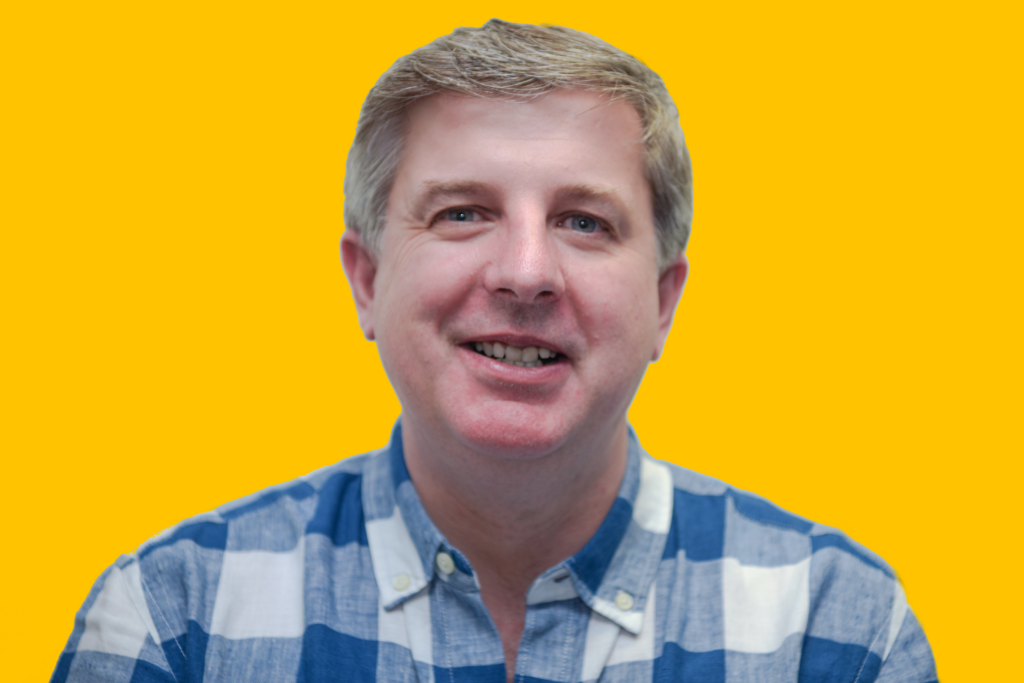
Dr. Anthony Brown is the Research Manager at Health Consumers NSW (HCNSW). HCNSW is the peak consumer group in the state, it is an independent, membership-based charity that works to ensure that health consumers (patients, carers, and families) are involved in the decisions that impact on them. Growing up in the Central West has given Anthony a strong connection to regional communities and a firsthand understanding of the factors that influence health and wellbeing outside major cities. Anthony is both a strong advocate for consumer involvement in research and an experienced researcher. Before joining HCNSW he was the Manager of the Men’s Health Information and Resource Centre at the University of Western Sydney, where he completed a doctorate (PhD) looking at retired men’s community engagement.

Dr Andrew Goodman

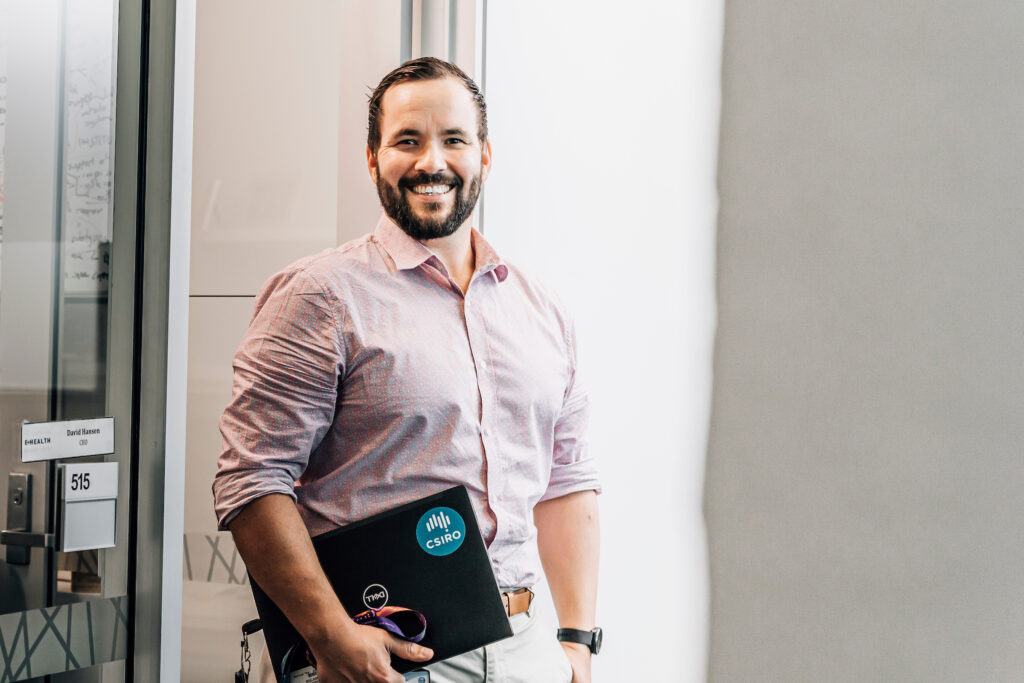
Dr Andrew Goodman is an Aboriginal man from Iningai Country in Queensland. Prior to his PhD, Dr Goodman spent more than 13 years as an Indigenous Healthcare Worker in Queensland, focusing on cardiac and healthcare services with Aboriginal and Torres Strait Islander peoples. Currently, he is a Research Scientist with CSIROs digital health program, where he leads research initiatives focused on building the evidence base for digital health technologies that align with the priorities, interests, and needs of Aboriginal and Torres Strait Islander peoples. Central to his approach is the principle of “Relationships before Partnerships,” which emphasises trust, reciprocity, and accountability as the foundation for meaningful collaboration with Aboriginal and Torres Strait Islander peoples and organisations.